Chandan Ki Kahani: The Timeless Story of Sandalwood, Tradition & Devotion

Some fragrances are more than just fragrances.
They become a part of our memories, traditions, celebrations, prayers, and cultural identity.
Chandan — Sandalwood — is one of them.
For centuries, sandalwood has held a special place in Indian culture. Its distinctive natural fragrance, beautiful heartwood, and association with religious traditions have made it one of India’s most treasured fragrant woods.
From the quiet corners of a home temple to grand celebrations in temples, the fragrance of Chandan has been part of countless generations.
This is Chandan Ki Kahani — a story of nature, tradition, devotion, fragrance, and heritage.
🌳 What Is Chandan?
Chandan, commonly known as Sandalwood, is primarily associated with the species Santalum album, often referred to as Indian Sandalwood.
The most valued part of the sandalwood tree is its fragrant heartwood. This portion contains naturally occurring aromatic compounds that give sandalwood its distinctive warm, soft, woody fragrance.
For generations, Indian Sandalwood has been used in religious rituals, traditional ceremonies, perfumery, incense, carving, and other cultural practices.
Today, people searching for Original Chandan, Premium Chandan, Sandalwood Stick, Chandan Powder, and Sandalwood Powder are not simply looking for a fragrant product.
They are looking for a connection to an ancient tradition.
And that is what makes Chandan so special.
📜 When Was Sandalwood Discovered?
One of the most fascinating questions about Chandan is:
When was sandalwood discovered?
There is no single historical date when sandalwood was “discovered.”
Humans have known and used sandalwood for thousands of years. Historical literature and archaeological research indicate that sandalwood was known in South Asia in antiquity, with evidence pointing to its use many centuries before the modern era.
Rather than being discovered on one particular day, sandalwood became valuable gradually as people recognised its remarkable fragrance, fine wood, and cultural significance.
Its story can be imagined as a journey:
From nature to people.
From people to tradition.
From tradition to generations.
Even today, AR78 SANDALWOOD is part of a modern generation that continues to appreciate the heritage and beauty of Chandan.
🕉️ Why Is Chandan Important in Indian Rituals?
Walk into a traditional Indian temple or home prayer room, and there is a good chance you will encounter Chandan.
Sandalwood paste has traditionally been used during puja, tilak, deity worship, and religious ceremonies.
But why Chandan?
🌿 Its Natural Fragrance
Sandalwood has a distinctive, gentle, and long-lasting woody aroma.
Its fragrance can create a pleasant and traditional atmosphere during prayer and worship.
🙏 Its Association With Purity
Across many Indian traditions, Chandan is associated with purity, auspiciousness, devotion, and reverence.
Offering sandalwood paste to a deity can therefore become a symbolic expression of respect and devotion.
🧘 Its Traditional Association With Calmness
Sandalwood has traditionally been associated with cooling and calming qualities in Indian culture.
These are cultural and traditional associations and should not be confused with guaranteed medical effects.
🪔 It Is an Offering
Perhaps the most meaningful aspect of Chandan is that it is often offered to the divine.
A small amount of sandalwood paste can represent a sincere act of devotion.
That simple act is one reason Chandan has remained an important part of Indian rituals for generations.
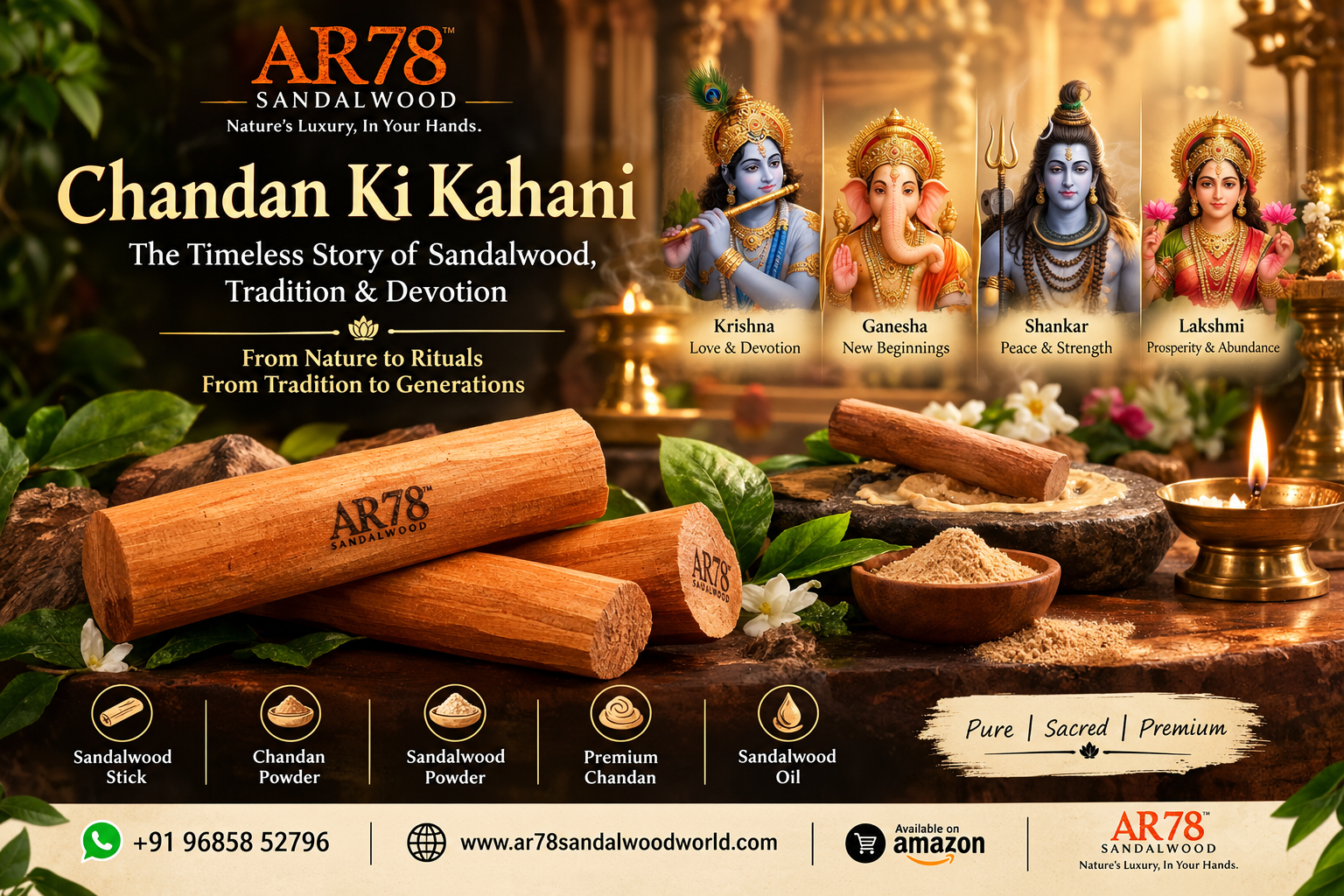
🪷 Why Is Chandan Used for Lord Krishna?
Lord Krishna is worshipped throughout India in many different traditions.
In several Vaishnava traditions, sandalwood paste is used in the worship and ceremonial adornment of Krishna and Vishnu.
The fragrant nature of Chandan makes it a natural part of devotional practices where the deity is respectfully decorated and offered fragrant substances.
For many devotees, offering Premium Chandan is not about luxury—it is about seva, devotion, and reverence.
The exact way Chandan is used can vary between temples, regions, families, and different Hindu traditions.
🐘 Why Is Chandan Used for Lord Ganesha?
Lord Ganesha is worshipped across India as a deity associated with auspicious beginnings and many other devotional traditions.
Chandan is traditionally included in various forms of Ganesha puja.
A Chandan tilak or sandalwood paste may be offered to Ganesh Ji as part of the ritual and ceremonial decoration of the deity.
For a home puja, Chandan Powder can also provide a convenient way to prepare sandalwood paste according to one’s family tradition.
A small amount of Chandan can add both fragrance and a traditional touch to the worship experience.
🔱 Why Is Chandan Associated With Lord Shankar?
Lord Shiva, also known as Shankar Ji, is worshipped in many different traditions throughout India.
Sandalwood has traditionally been used in certain forms of Shiva worship and ceremonial offerings.
Chandan’s traditional association with coolness, purity, and calmness makes it symbolically meaningful in devotional practices involving Shiva.
As with other Hindu rituals, the exact materials and methods used in worship can differ according to regional, family, and sectarian traditions.
🌸 Why Is Chandan Associated With Goddess Lakshmi?
Goddess Lakshmi is traditionally worshipped as the goddess associated with prosperity, abundance, and auspiciousness.
In some Hindu traditions and religious literature, sandalwood has also been associated with Lakshmi.
Because Chandan has traditionally been regarded as fragrant, pure, and auspicious, it has found a place in various religious and ceremonial practices associated with prosperity and good fortune.
This cultural connection is one reason Premium Chandan continues to be valued during festivals, celebrations, and religious occasions.
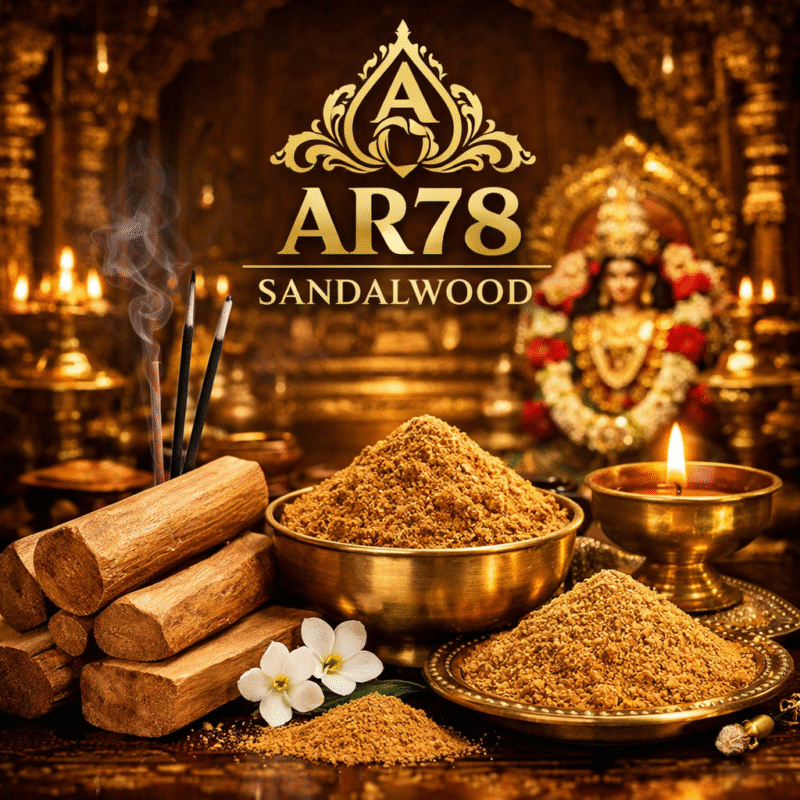
🪵 The Traditional Sandalwood Stick
One of the most beautiful ways to experience Chandan is through a traditional Sandalwood Stick.
The process is simple.
A sandalwood stick is gently rubbed against a traditional stone surface with a small amount of water.
As the wood is rubbed, it produces a fragrant sandalwood paste.
The process connects us with an older and simpler way of preparing Chandan.
There is something special about watching a piece of sandalwood slowly transform into fragrant paste through nothing more than wood, water, and time.
For many families, this is more than preparation.
It is tradition.
🌿 Chandan Powder & Sandalwood Powder
Modern lifestyles have made convenience important.
This is where Chandan Powder and Sandalwood Powder become useful.
Instead of grinding a sandalwood stick every time, prepared sandalwood powder can be used according to the intended traditional purpose.
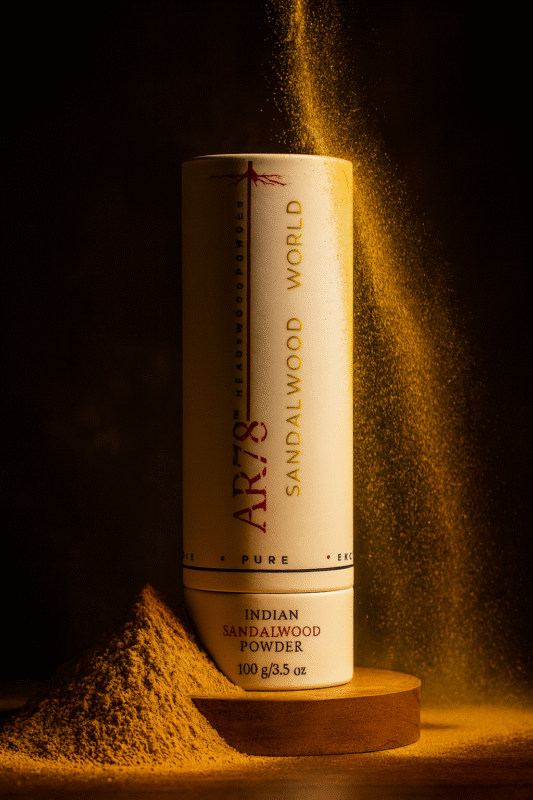
Chandan Powder is commonly associated with religious and cultural applications, including the preparation of sandalwood paste.
When choosing Original Chandan Powder or Premium Chandan Powder, consumers should consider factors such as sourcing, product information, quality, and authenticity rather than judging a product only by its colour or fragrance.
🏛️ The Story of Mysore Sandalwood
When discussing Indian sandalwood, one name has become particularly famous:
Mysore Sandalwood
Mysore and Karnataka have a long and important historical relationship with sandalwood.
Sandalwood became an important natural and economic resource of the historic Mysore region, helping establish the region’s lasting association with the fragrant wood.
The name Mysore Sandalwood therefore carries a strong connection with the heritage of Mysore and Karnataka.
However, it is important to distinguish between the broader term Indian Sandalwood and the specific historical/geographical association of Mysore Sandalwood.
For anyone searching for Mysore Sandalwood, Original Chandan, or Premium Chandan, understanding the actual origin and documentation of a product is important.
💧 Sandalwood Oil: Another Expression of Chandan
The story of sandalwood does not end with the wood.
Sandalwood is also known for its aromatic oil.
Sandalwood Oil has a distinctive warm, woody, and soft fragrance and has been valued in traditional perfumery and fragrance-making for generations.
The depth and smoothness of sandalwood’s aroma have helped make it one of the most recognisable natural fragrance materials.
From a simple Sandalwood Stick to fragrant sandalwood oil, the same natural heritage appears in different forms.
🇮🇳 Chandan and Indian Heritage
Chandan is much more than a fragrant material.
It is part of India’s cultural heritage.
It has been associated with:
- Puja and religious ceremonies
- Temple traditions
- Tilak and devotional practices
- Traditional fragrance
- Incense
- Carving and craftsmanship
- Festivals and celebrations
- Cultural and spiritual practices
In one home, Chandan may be offered to Krishna.
In another, it may be used during Ganesh Puja.
In another tradition, it may be associated with Shiva or Lakshmi worship.
Practices vary across India, but the underlying connection remains:
Chandan is traditionally associated with reverence, fragrance, purity, and devotion.
🌱 Choosing Original Chandan
Today, consumers can find many products marketed as sandalwood, Chandan, or sandalwood-inspired products.
If you are looking for Original Chandan, Premium Chandan, Sandalwood Stick, Chandan Powder, or Sandalwood Powder, consider:
- The source of the product
- Product labelling and documentation
- Responsible and legal sourcing
- Product composition
- The reputation of the seller or brand
Sandalwood is a valuable natural resource, making responsible sourcing and conservation particularly important.
Choosing responsibly sourced products helps support a more sustainable future for this remarkable tree.
🌿 AR78 SANDALWOOD — Continuing the Story of Chandan
At AR78 SANDALWOOD, Chandan represents more than a product.
It represents a connection between nature, Indian heritage, fragrance, and tradition.
Whether you are looking for a Sandalwood Stick, Chandan Powder, Sandalwood Powder, Premium Chandan, or Original Chandan, every form of sandalwood carries a story.
A story of a tree.
A story of fragrance.
A story of tradition.
A story that has travelled through generations.
At AR78 SANDALWOOD, we believe that understanding the story behind Chandan makes the experience even more meaningful.
Because when you hold a piece of Chandan in your hands, you are holding more than wood.
You are holding a small part of India’s fragrant heritage.
🕉️ Chandan Ki Kahani — A Story That Never Ends
Imagine a traditional Indian prayer room.
A deity beautifully decorated.
Flowers placed beside a small diya.
And a Sandalwood Stick being gently rubbed against a stone with a little water.
Slowly, the fragrance of fresh Chandan begins to fill the room.
It is a simple moment.
But it connects the present with the past.
The same fragrance that generations before us experienced.
The same tradition that parents passed to their children.
The same Chandan that continues to find its place in Indian homes and temples today.
That is the beauty of Chandan Ki Kahani.
From nature to tradition.
From fragrance to devotion.
From one generation to the next.
And the story continues.
🌿 AR78 SANDALWOOD
Nature’s Luxury, In Your Hands.
Premium Chandan | Original Chandan | Sandalwood Stick | Chandan Powder | Sandalwood Powder
📲 WhatsApp: +91 96858 52796
🛒 Available on Amazon
AR78 SANDALWOOD
Nature’s Luxury, In Your Hands.